
“There is nothing so useless as doing efficiently that which should not be done at all.” – Peter Drucker
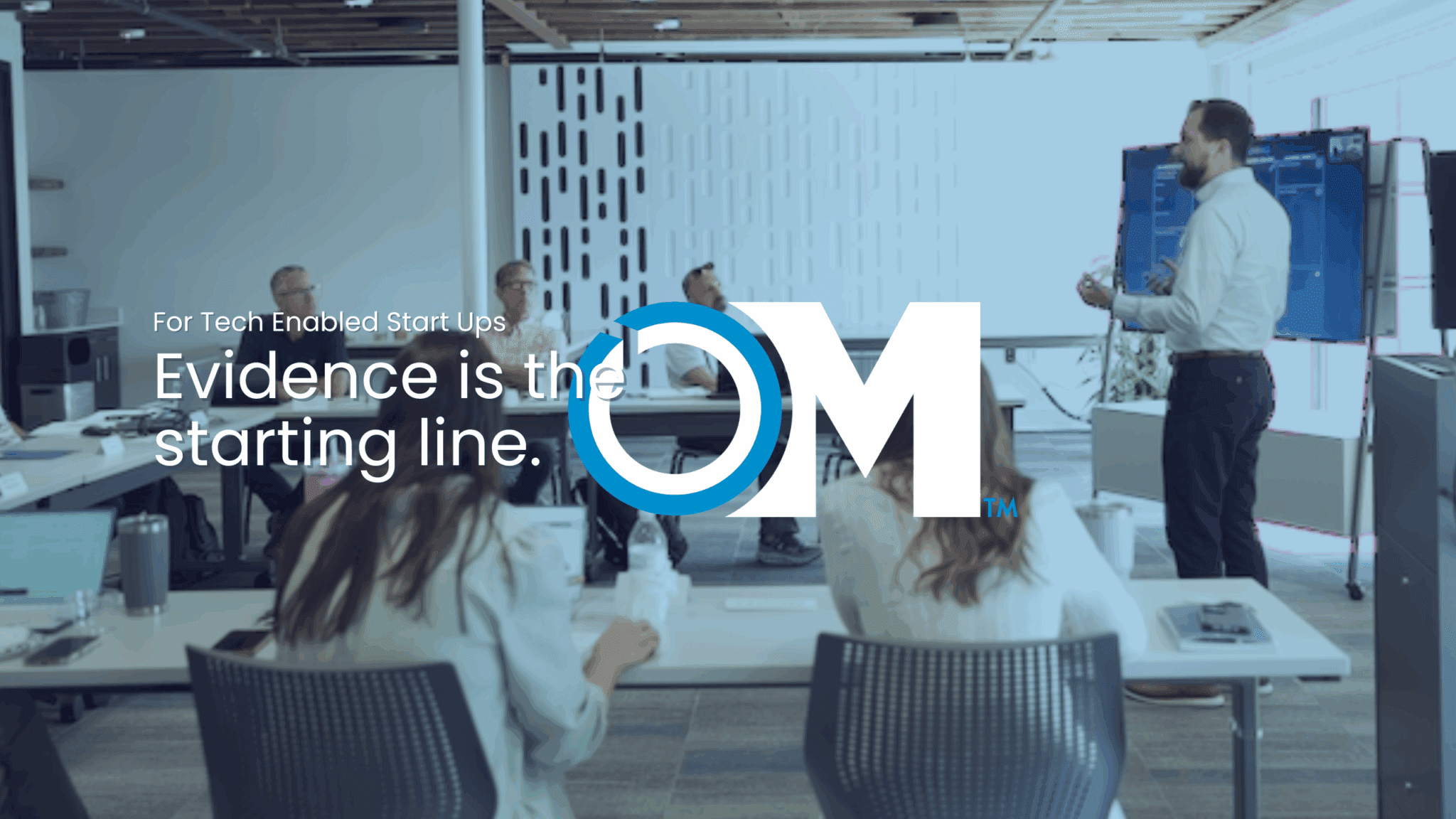
That one line should hang above every whiteboard in every co-working space. Because in startups, the graveyard is filled with beautifully built products nobody asked for.
At Opportunity Machine, we’ve seen this play out again and again. Founders come in with passion, talent, and a seemingly brilliant idea. But brilliance doesn’t validate demand—evidence does. And evidence is where the real founder’s journey begins.
Who This Blog Is For
Let’s be clear about who we’re talking to.
-
The intrapreneur. You know your industry inside and out. You’ve spotted a problem so frustrating it keeps you up at night. You might be the only one crazy—or brave—enough to fix it.
-
The opportunity seeker. You’ve got the entrepreneurial spark. You notice inefficiencies, broken systems, or untapped niches and can’t help but ask, “Why hasn’t someone solved this yet?”
-
The builder. You can code, design, or prototype in your sleep. But you’re missing the other half of the equation: who’s buying, and why?
The common thread: you’re drawn to tech-enabled, scalable projects. Maybe it’s hardware. Maybe it’s software. Maybe it’s a little of both. Whatever the form, you know technology can turn a local fix into something that scales.
That’s where a startup program like OM comes in.
What a Startup Program Really Is
Every founder pays “tuition.” Long hours. Endless pitches. Tests that flop. That part is universal.
At OM, the difference is you don’t have to pay that tuition alone. You move from wandering on your own to testing inside a structured community.
That shift unlocks a multiplier effect (the power of one becomes the power of many):
-
Mentors who open doors and give first.
-
Peers who become allies, collaborators, or simply the person who gets it when no one else does.
-
Builders who ship prototypes, dashboards, and real code—not just classroom projects.
Community doesn’t replace the grind—you’ll still put in the sweat. But it ensures that sweat goes further. Instead of drifting for years, you compress learning into months and trade isolation for momentum.
And because OM is woven into a larger innovation flywheel—powered by LA.IO, LEDA, UL Lafayette, LRTC, and others—your progress doesn’t just stay local. Each step plugs into a statewide network of capital, talent, and partners built to help Louisiana’s founders scale.
The First Step: De-Risking
Ideas have little value. The real test is whether the problem behind them is urgent, painful, and shared by enough people. At OM we implement de-risking by proving—with evidence—that your idea deserves your time, your capital, and eventually, other people’s time, energy, and money.
The framework is simple:
-
Desirability – Do people actually want this? Not polite nods—look for unprompted emotion, makeshift workarounds, and urgency.
-
Viability – Will enough customers pay enough to outweigh the cost of delivering it?
-
Feasibility – Can it realistically be built with today’s constraints?
Most new founders start at feasibility because they’re wired to solve problems quickly (and it’s the fun part). But that’s backwards. You begin with desirability. If nobody wants it, nothing else matters.
Our playbook spells it out clearly: a single customer’s frustration is just an anecdote. When you start hearing the same problem, in the same words, from multiple independent voices, you’re no longer chasing opinions—you’re uncovering a pattern. When that pattern carries urgency and unprompted emotion, you’ve found a hair-on-fire problem. That’s when you’ve earned the right to build.
Founder Stories From the OM Community
Blue Partner – Turning Body-Cam Footage Into Time Saved
The founders of Blue Partner noticed a glaring issue in police departments: officers were spending nearly half their time writing reports. Chiefs complained, officers felt burned out, and communities lost valuable street presence.Their first instinct was bold—use body-cam footage to generate reports automatically. But instead of rushing to code, they started with customer discovery. They sat down with officers and joined ride-alongs, asking what was really costing the most time. They learned that while reporting was a major frustration, it was only part of the story.
Disconnected systems forced officers to juggle multiple tabs just to get the information they needed, costing precious time during calls. That insight reshaped the mission. Blue Partner expanded beyond report writing to connect systems, keep officers’ hands free, and deliver crucial information exactly when it’s needed. The result is a platform designed to streamline operations and solve everyday pain points that keep officers from focusing on the job.
The lesson: Customer discovery did more than validate the pain; it revealed the bigger picture and gave Blue Partner a clear path to build what officers need most.
Empath Legal – The Dashboard Test
In early conversations with trial attorneys, Empath Legal pitched a powerful idea: AI to help lawyers spot juror bias during jury selection. Attorneys leaned in, but when shown a dense prototype, they pushed back: “I don’t have time in jury selection to look at all of this. “That moment revealed the real pain point: speed and simplicity under pressure.
Accuracy mattered, but in a high-stakes environment, attorneys valued insights they could digest in seconds. Empath pivoted, redesigning the dashboard to be simple, visual, and courtroom-centric.
Builder 1.0 Lesson: Evidence isn’t just proving your tech works; it’s revealing the trade-offs customers refuse to make. Discovery shows trial lawyers value accuracy, but they won’t donate extra prep time to get it. Focus on accuracy without added minutes—ideally, accuracy with less time.
Keepers – Reliability Over Cost
When Carleena Andrepont founded Keepers, the focus was on solving reliability in housekeeping. At first, the challenge seemed to be cleaners not showing up or being able to find cleaners.
But when she sat down with property managers, she discovered that true reliability in this industry goes beyond attendance. Reliability also means built-in quality assurance. A property is only ready when it consistently meets guest standards every single time.
That realization shaped Keepers into a structured, fully automated housekeeping management platform, rather than just a marketplace for cleaners to find jobs. At the same time, cleaners are paid more than the industry norm, which allows Keepers to attract and retain the best talent. Great cleaners who feel valued deliver great work, and that consistency creates trust for property managers.
The result is powerful. With reliability, quality assurance, and cleaner retention solved, property managers reduce operational costs, eliminate distractions, and can focus entirely on guest experience and business growth.
The lesson is clear. Reliability and quality assurance, combined with fair pay for cleaners, create more than housekeeping solved. They create the foundation for scaling short-term rental businesses.
GlowSens – Don’t Overfit Too Soon
GlowSens had breakthrough luminescent sensor technology. Their first instinct was to niche hard into defense contracts. On the surface, that made sense—clear buyer, big budgets. But during discovery, they realized something bigger: the same core tech solved urgent problems in infrastructure and manufacturing, where adoption cycles were shorter.
If they had overfit to defense too soon, they would have missed commercial markets that offered earlier traction. Instead, they validated defense as one promising niche while staying flexible enough to vet multiple segments.
Builder 1.0 Lesson: Niche down to discover your early adopter segment, but don’t over-specialize before the evidence is in. Discovery is about focus and optionality. Find your niche—but let evidence, not assumptions, decide how narrow to go.
Why Evidence Matters
Every one of these stories shares the same spine:
- Initial founder assumptions (what we believed).
- Critical insight from customer engagement (what reality taught us).
- What we changed (the next experiment, not a grand rebuild).
When founders do the reps—interviews, artifact gathering, pilots—the right problem snaps into focus.
The Accelerator Effect: Community as a Force Multiplier
Doing this alone is brutal. Founders outside a community face:
-
Closed doors → costly assumptions
-
Limited networks → biased data and false validation
-
Budget strain
-
Burnout
Inside OM, membership flips that script. You gain:
-
Cheerleaders who celebrate your wins
-
Confidants who share the struggles
-
Allies who open doors (while still challenging your assumptions)
-
Mentors who give first
That’s what defines OM: a community where giving comes before asking—and where helping someone else often becomes the key to your own breakthrough.
How to Start De-Risking (Today)
If you take nothing else from this post, take this: Don’t build yet. Test first.
And you don’t have to do it alone. At OM, these are exactly the first steps we’ll walk through together:
-
Talk to 10–15 people in your ICP and listen for insights you can’t find online or with an LLM.
-
Use simple demos—Figma, mock ads, clickable prototypes—before a single line of code. (Because “Sure, I’d buy that” is not reliable.)
-
Test willingness to pay, even with a placeholder “Buy Now” button. (Because “Sure, I’d buy that” is not reliable.)
The point isn’t that you must figure this out before coming to us. It’s that these are the muscles we’ll build together once you’re in the room. When you’re ready to put structure around your testing and gain a community that sharpens your process, that’s when OM changes the game.
Closing: The Real Starting Line
At OM, we like to remind founders: ideas are not the starting line. Evidence is.
If you’re sitting on an idea wondering if you’re “really a founder,” consider this your invitation.
-
Join the community.
-
Put your idea in motion.
-
Collect evidence.
-
Build something amazing.
Because that’s how category-defining companies are born. If you’re serious about testing your idea, the first step isn’t code or funding—it’s committing to a community built to help you de-risk and grow.